
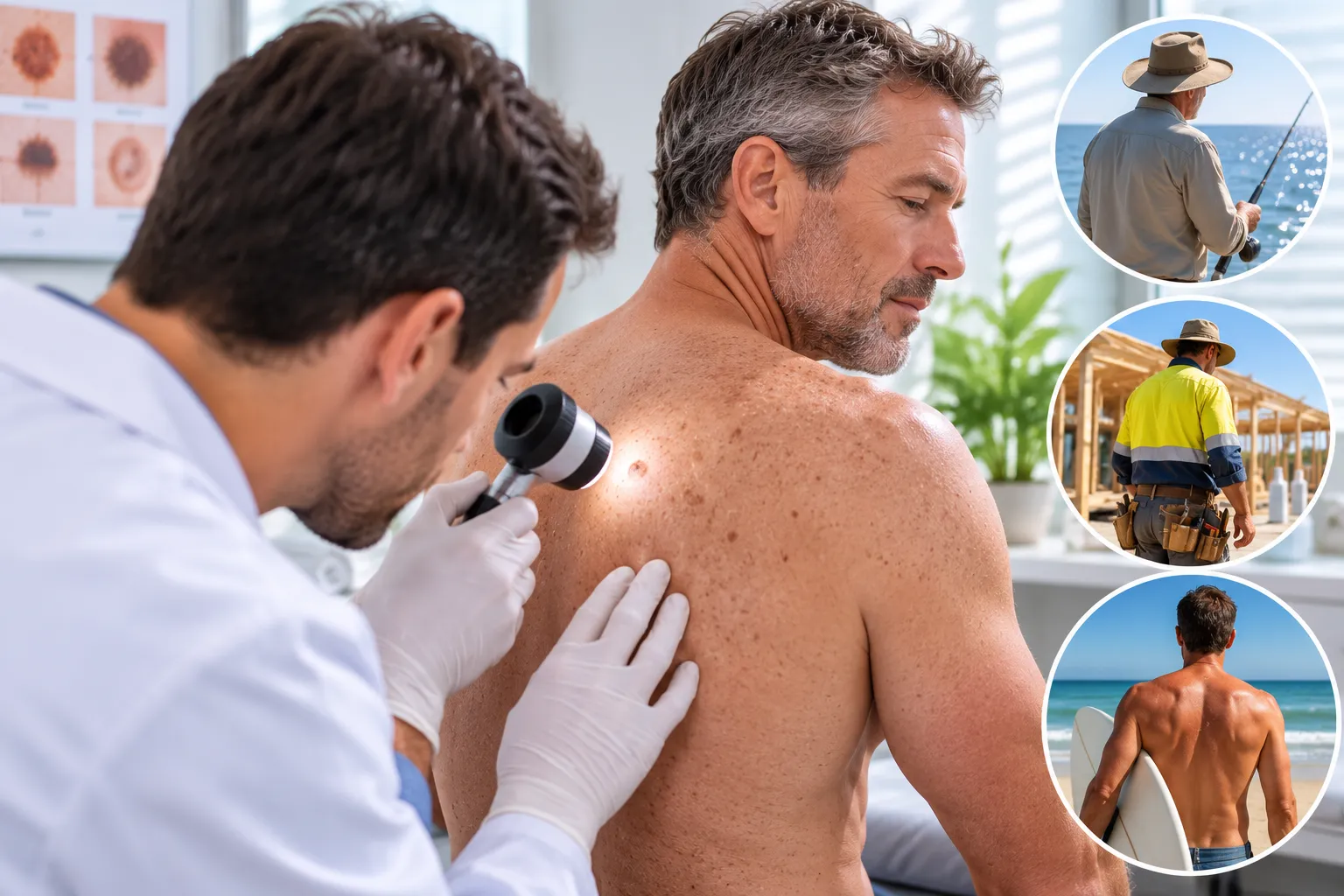
Skin cancer does not pick favourites, but the way it gets caught often does. Men consistently turn up at the clinic with larger, more advanced skin cancers, not because their skin behaves differently, but because they waited longer to have someone look at it. Habit, awareness and a general reluctance to book an appointment until something hurts all play a part.
Key Takeaways
- Men face a higher lifetime risk of melanoma, with cumulative sun exposure and lower rates of sun protection contributing to the difference in risk compared with women.
- Delayed diagnosis is a major concern, as men are more likely to overlook skin changes or postpone seeing a doctor until a spot becomes noticeable or problematic.
- Certain areas need extra attention, particularly the back, scalp, ears and neck, which can be difficult to check without professional assistance.
- Watch for suspicious changes, including new or growing spots, changing moles, persistent sores, rough patches, or lesions that look different from surrounding marks.
- Regular professional skin checks can support early detection, with annual examinations recommended for many men and more frequent checks advised for those with additional risk factors.
Where Men Sit in the Statistics
Australian figures show a clear divide between men and women when it comes to skin cancer. Men are estimated to have roughly a 1 in 14 chance of being diagnosed with melanoma by age 85, compared with 1 in 21 for women, according to figures reported by Cancer Council Australia. That gap is significant, and biology alone does not account for it.
Exposure explains a fair bit of it. Plenty of men have spent decades on worksites, farms or the back of a ute, where sun protection was never part of the routine and a shirt did most of the work. Sunscreen gets skipped on the way out the door, the hat stays in the cab, and lunch happens wherever there is somewhere to sit. None of it feels significant on any given day, but the damage accumulates quietly over a working life.
The Habits That Push Diagnosis Back
Higher risk is only half the problem. Men are also more likely to be diagnosed once the cancer has progressed, and the average age at melanoma diagnosis is higher for men than for women, according to the same Cancer Council Australia data. That pattern points to spots being noticed and acted on later, which usually means more involved treatment and a longer recovery.
The reasons behind it are fairly ordinary. Many men never check their own skin, particularly the places they cannot easily see, such as the back, the scalp and the backs of the ears. Others do notice something unusual and decide to wait it out, assuming it will settle on its own or that it is not serious enough to bother anyone about. There is also a wider habit of avoiding the doctor unless something hurts or interferes with daily life, and early skin cancer does neither.
Changes That Deserve Attention
Most early skin cancers look harmless, and that is the reason so many go ignored for months. Knowing what deserves a second look makes it far easier to act on something before it develops:
- A new spot that was not there before, particularly one that is growing
- A mole that has changed in size, shape or colour
- A sore that will not heal or one that keeps scabbing and reopening
- A patch of skin that feels rough or scaly or looks different to the skin around it
- Any spot that stands out from your other moles and freckles, sometimes called the “ugly duckling” sign
If any of these sound familiar, do not give it a few more weeks to see what happens. Book an appointment with a melanoma specialist.
Put Skin Checks on the Calendar
Most men do not book a skin check until their partner spots something on their back and nags them into it. A yearly appointment at a skin cancer clinic takes that out of the equation. Some men need to be seen more often, particularly those who burn easily or have a parent or sibling who has had a melanoma, and your doctor will tell you where you sit.
Book the Check You Have Been Putting Off
A skin cancer check gives a trained professional the chance to examine your whole body, including the spots you could never inspect yourself. Equipment built to pick up changes long before they are visible to the naked eye is used.
There is no reason to wait until a spot starts to worry you. The appointment is short, comfortable, and far less confronting than most men expect. If you have been meaning to organise one for a while, treat this as the nudge because catching something early is what keeps the treatment simple.
Common Questions About Men’s Skin Checks
Why are men diagnosed with skin cancer later than women?
Men are more likely to skip regular skin checks and delay seeing a doctor until a spot becomes obviously concerning. By that stage, the cancer is often further advanced than it would have been with an earlier check.
Are men more likely to get skin cancer than women?
Yes. Australian data shows men carry a higher lifetime risk of melanoma than women, largely due to greater cumulative sun exposure and lower rates of sun protection and routine checking.
What areas should men pay extra attention to?
The back, scalp, ears and neck are common trouble spots, especially for men who have worked outdoors for years. These are also the hardest areas to inspect yourself, which is where a professional check earns its value.
How long does a skin check take?
A full-body skin check usually takes around 15 to 20 minutes. It is a visual examination using specialised equipment, and it is non-invasive and generally comfortable.
What if I have never had a skin check before?
It is never too late to start. If you are over 40, work outdoors, or have fair skin, booking a first check is a sound move whether or not you have noticed anything unusual.
