
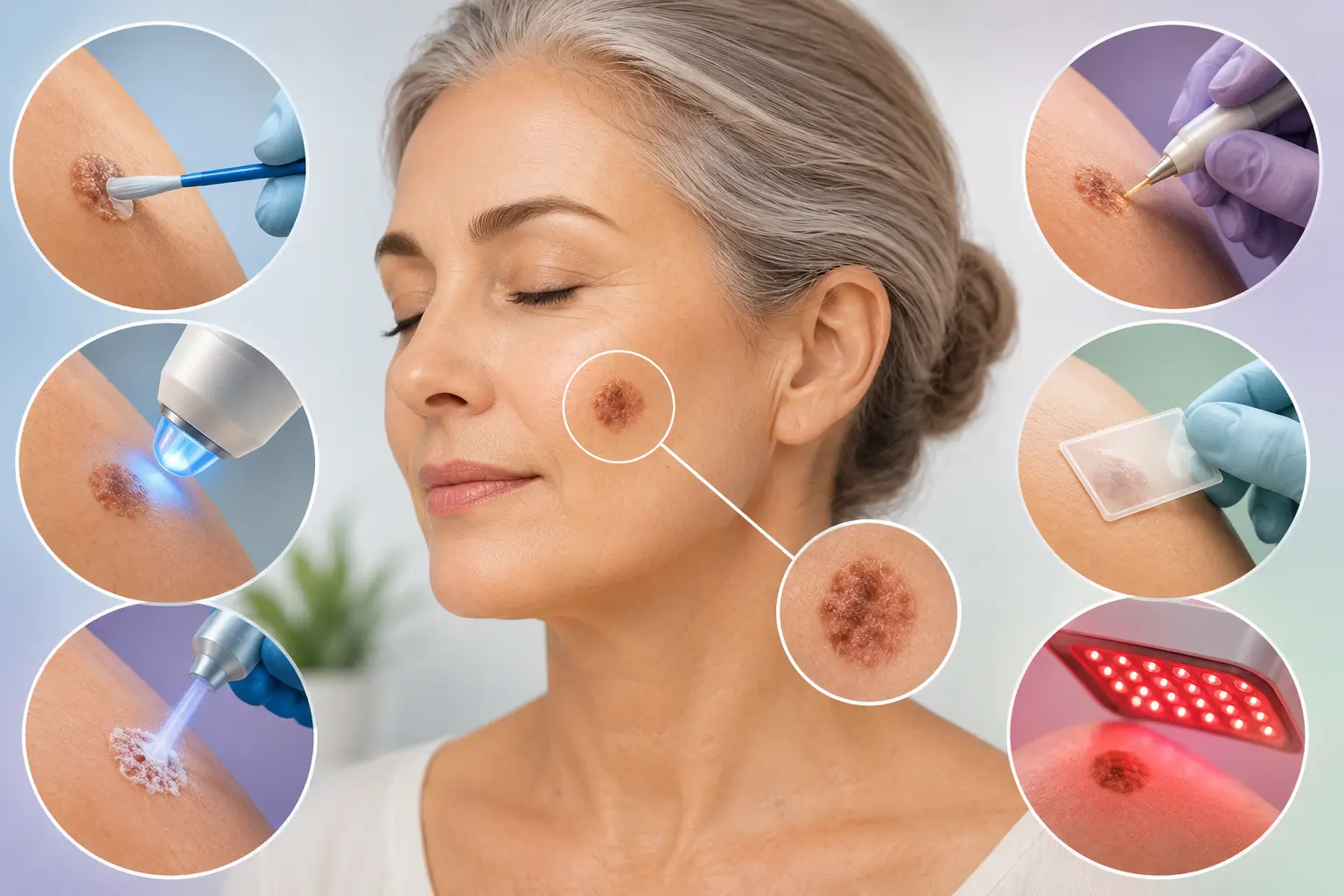
Skin cancer treatment does not always mean surgery. For some people, especially when skin cancer is found early or sits in a sensitive area, a doctor may recommend a non-surgical option instead. These treatments can target cancer cells without cutting into the skin, which may mean less downtime, less discomfort, and a lower chance of visible scarring.
That does not mean every skin cancer can be treated this way. The right option depends on the type of skin cancer, where it is, how far it has developed, and your overall health.
Key Takeaways
- Skin cancer treatment is not always surgical; early or superficial cases may be treated with non-invasive options that reduce scarring, pain, and downtime.
- The main types include basal cell carcinoma, squamous cell carcinoma, and melanoma, each differing in growth speed, risk, and treatment approach.
- Non-surgical treatments include topical creams, photodynamic therapy, cryotherapy, radiotherapy, and laser therapy depending on cancer type and depth.
- Treatment choice depends on diagnosis, cancer stage, location, and overall health, with melanoma often requiring more aggressive care.
- Ongoing skin checks remain essential after treatment to detect recurrence or new lesions early and ensure long-term monitoring and care.
The Main Types of Skin Cancer
Skin cancer can appear in different forms, and each type behaves differently. The most common types are basal cell carcinoma, squamous cell carcinoma, and melanoma.
Basal Cell Carcinoma
Basal cell carcinoma usually develops in the lower part of the epidermis. It is the most common type of skin cancer and often grows slowly.
Even so, it can damage the surrounding skin and tissue if it is not treated. It may appear as a pearly lump, a pale patch, or a sore that bleeds, crusts, itches, or does not heal properly. A superficial basal cell carcinoma can look more like a red, scaly patch on the skin.
Squamous Cell Carcinoma
Squamous cell carcinoma forms in the flat cells on the outer layer of the skin. It can grow and spread more than basal cell carcinoma, so it needs timely assessment and treatment. It is still generally less aggressive than melanoma, but it should never be ignored.
Melanoma
Melanoma is the most serious type of skin cancer. It begins in the melanocytes, which are the cells that produce melanin, the pigment that gives skin its colour. Although melanoma is less common than non-melanoma skin cancers, it can spread to other parts of the body if it is not detected early.
Non-Surgical Treatment Options for Skin Cancer
Non-surgical skin cancer treatments are usually considered for certain basal cell carcinomas and squamous cell carcinomas, particularly when the cancer is superficial, early, or located somewhere surgery may be more difficult. These treatments are designed to destroy cancer cells while avoiding a traditional surgical procedure.
Your doctor may discuss one or more of the following options depending on your diagnosis:
- Topical treatments use medicated creams or gels applied directly to the affected skin. Medicines such as 5-fluorouracil or imiquimod may be used to destroy cancer cells or help the immune system respond to the abnormal cells.
- Photodynamic therapy combines a light-sensitive medicine with a specific type of light. The medicine is applied to the affected area, and once activated by light, it helps destroy the cancer cells.
- Cryotherapy uses liquid nitrogen to freeze and destroy abnormal cells. It is often used for small or superficial skin cancers.
- Radiotherapy uses targeted radiation to damage and destroy cancer cells. It may be considered for larger cancers or cancers in areas where surgery may be difficult.
- Laser therapy uses focused light to treat very superficial skin cancers. It is generally reserved for carefully selected cases.
Each option works in a different way, and the choice is not simply about convenience. Your doctor will consider whether the treatment is suitable for the type of cancer, its depth, its location, and your personal health needs.
Why Non-Surgical Treatment May Be Recommended
Non-surgical treatment may be recommended when a less invasive approach can treat the skin cancer safely and effectively. Because these treatments do not involve cutting the skin, they can often reduce discomfort and support a faster return to everyday activities.
They may also be useful when the cancer is in a visible or sensitive area, such as the face. In these cases, preserving healthy surrounding tissue and reducing the risk of scarring are considered as part of the treatment plan. It may also be a better fit for older adults or people with health conditions that make surgery more risky.
Many non-surgical treatments can also be performed as outpatient care. You can usually attend your appointment and return home the same day, rather than staying in hospital overnight.
However, non-surgical does not mean minor or casual. These treatments still need proper medical assessment, planning, and follow-up to make sure the cancer is being treated appropriately.
Choose a Treatment Based on Your Diagnosis and Health
A treatment that works well for one person may not be right for another. Skin cancer treatment needs to match the cancer itself and the person receiving care.
The type of cancer is one of the first things your doctor will consider. Some non-surgical treatments may be suitable for basal cell carcinoma or squamous cell carcinoma, while a melanoma specialist might have to resort to a more aggressive approach because of melanoma’s risk of spreading.
The stage of the cancer also matters. A small, early, localised skin cancer may respond well to a topical treatment, cryotherapy, or photodynamic therapy. A larger or more advanced cancer may need radiotherapy, surgery, or another form of treatment.
Your general health can also affect the treatment your doctor recommends. If you have other medical conditions, a non-surgical option may reduce treatment risk.
The best decision comes from a proper diagnosis and an open discussion with your healthcare provider. That conversation should cover what the treatment involves, what results to expect, what side effects may occur, and how your skin will be monitored afterwards.
Stay Alert to Skin Changes After Treatment
Skin checks remain important even after treatment. A treated spot may heal well, but new or changing lesions can still appear elsewhere on the skin. Regular monitoring helps identify suspicious changes early, when treatment is often more straightforward.
You can help by checking your skin for new spots, changing moles, sores that do not heal, or lesions that itch, bleed, crust, or grow. It is also worth paying attention to marks that look different from the others around them.
Ongoing checks at a trusted skin clinic also help monitor the results of skin cancer treatment and watch for any signs of recurrence. A doctor can examine areas that are hard to see yourself and identify subtle changes that may not look obvious at first.
For many people, an annual skin check may be recommended. Those with a history of skin cancer or a higher risk may need more frequent appointments.
Skin cancer care does not end once a lesion is treated. It continues through regular reviews, early action, and a clear plan for what to do if something changes.
Start With a Skin Check and a Clear Treatment Plan
If you have noticed a new spot, a changing mole, or a sore that will not heal, it is worth having your skin checked at an established skin cancer clinic. Even if you are not sure whether the change matters, a proper assessment can give you answers and help you avoid guessing.
At Skin Clinic Robina, we provide comprehensive skin checks and personalised treatment planning based on your diagnosis, health needs, and preferences. If a non-surgical skin cancer treatment is suitable, we can explain your options clearly and guide you through the next steps with care.
