
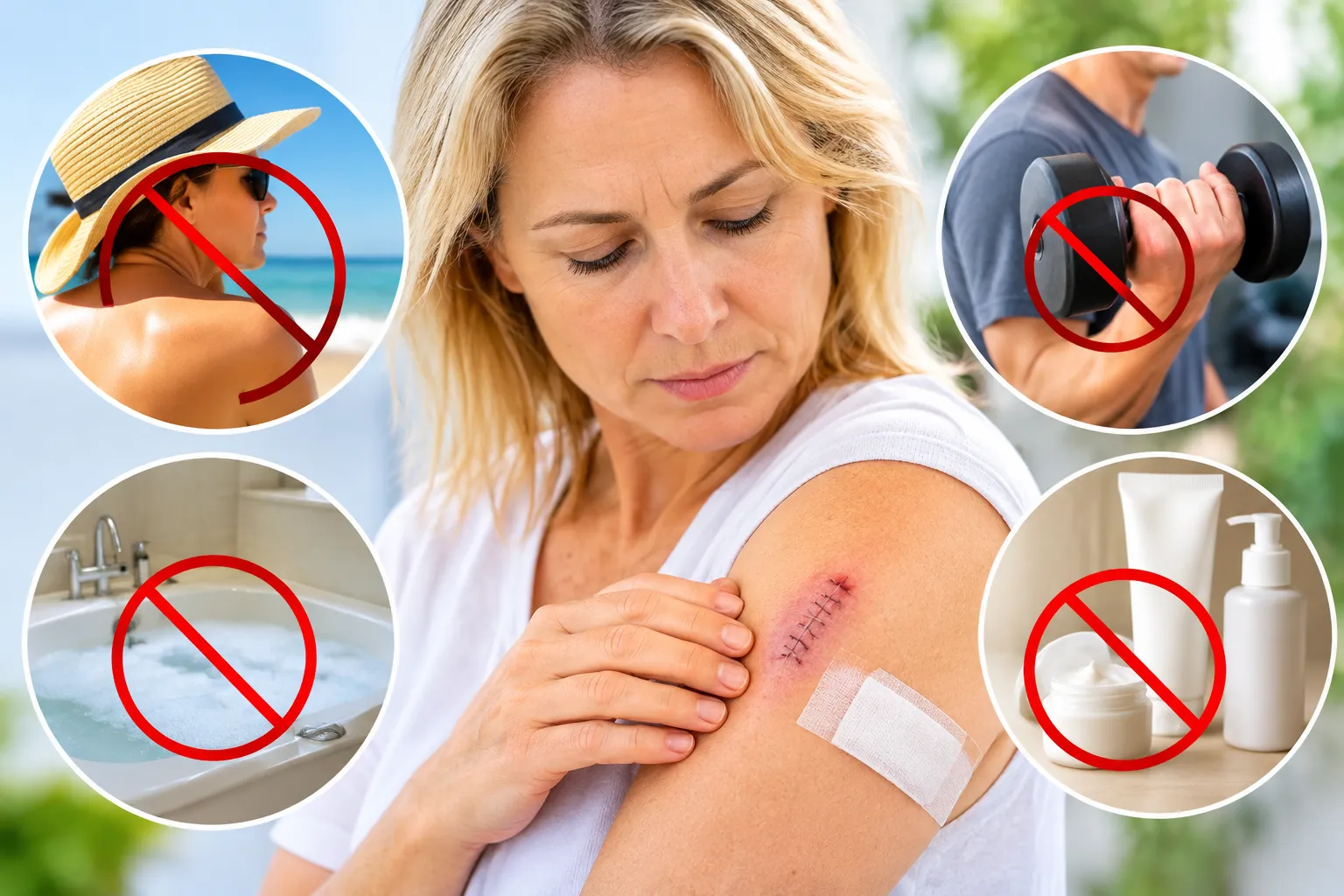
A skin cancer procedure can seem like a big step, even though it is usually quick and done under local anaesthetic, with no overnight stay. The care you give the wound over the following fortnight counts just as much as the procedure itself because it affects how neatly the skin closes, how well it resists infection and how your scar looks later on.
If you are preparing for surgery, you are far from the only one. Cancer Council Australia puts the estimated lifetime risk of a skin cancer diagnosis at no less than two in three Australians. Below, we cover the common aftercare mistakes that can set your recovery back and what to do instead.
Key Takeaways
- Avoid strenuous exercise, heavy lifting and activities that may stretch or put pressure on the surgical wound.
- Do not pick at scabs, remove stitches yourself or disturb the healing area.
- Keep the wound clean and follow your clinician’s instructions for dressing changes and wound care.
- Avoid swimming, soaking the wound or exposing it to excessive moisture until advised it is safe.
- Watch for signs of infection, such as increasing redness, swelling, pain, discharge or fever, and contact your healthcare provider if they occur.
Push Through Heavy Workouts While Your Stitches Heal
A hard session lifts your heart rate and blood pressure, which can lead to bleeding, bruising and swelling around new stitches. Any movement that involves lifting, stretching or twisting can also pull the edges of the wound apart.
For the first one to two weeks, put running, weight training, contact sport and heavy gardening on hold, although gentle walking is generally fine. Swimming needs to wait until your stitches are out.
Surgery on the back, shoulders or lower legs needs particular care. These parts of the body move constantly, so a scar in these areas is more prone to stretching.
Submerge or Soak a Fresh Surgical Wound
Your doctor will usually ask you to keep the dressing dry for the first 24 to 48 hours. Once that window has passed, a brief shower is generally fine, provided you pat the area dry instead of rubbing it.
Baths, pools, spas and the ocean are a different matter. Time in the water softens the wound and gives bacteria a way in, so wait until your stitches are out and the skin has fully closed before you take a dip.
Scratch, Pick or Tug at Healing Stitches
It is normal for a wound to itch as it heals. Even so, scratching or picking at scabs can reopen the wound, lead to infection and leave you with a wider scar.
Resist the temptation to trim or remove your stitches yourself, even when they look ready to come out. Your clinic will take care of that for you.
Ignore the Dressing Care Your Doctor Sets
Your doctor will give you dressing instructions before you leave, and it pays to follow them exactly. You may be told to leave the dressing untouched for a set period, or to change it each day and apply a thin layer of petroleum jelly. A wound that stays clean and slightly moist generally heals faster and leaves less scarring than one allowed to dry out and form a crust.
Self-Medicate With Aspirin or Ibuprofen
Aspirin and ibuprofen are common pain relievers, but both can increase bleeding after surgery. Paracetamol is usually a safer option, although you should still check with your doctor before taking it. If you are on prescribed blood thinners, do not stop taking them on your own. Speak with your doctor about your medication both before and after the procedure.
Reach for a Drink or a Cigarette While You Heal
Alcohol thins the blood, which can add to bleeding and swelling over the first few days. Tobacco smoke reduces blood flow to the skin, which slows recovery and raises the chance of infection and poor scarring. If you smoke, your surgery is a good opportunity to cut down or quit altogether.
Lie Flat at Night After Facial Surgery
Facial surgery often leads to swelling around the eyes, nose and lips. Rest your head on a couple of extra pillows for the first few nights. The added height helps fluid drain away from the area and makes sleep more comfortable.
Leave a Fresh Scar Exposed to the Sun
New scar tissue burns easily, and UV exposure can leave it permanently darker. While the wound heals, keep it covered with clothing or a hat. Once it has healed, apply SPF 50+ sunscreen to the scar for at least 12 months. Keep in mind that UV levels in Australia can be high even when the sky is cloudy.
Brush Off Signs of Infection
A degree of redness, swelling and tenderness is a normal part of recovery. Certain symptoms are not, so call your clinic if you notice any of the following:
- Redness that spreads
- Pain that gets worse after the third day
- Pus or a bad smell
- A wound that keeps bleeding after 15 minutes of firm pressure
- A fever
Miss Your Follow-Up Skin Checks
After one skin cancer, your risk of developing another increases. Research from QIMR Berghofer puts a number on this risk. By the time they reach 70, around half of Australian men who have been treated for skin cancer will need a further one removed within a four-year period. Book Gold Coast skin cancer checks at regular intervals so any new spots are picked up early, while they are still at their easiest to treat.
Give Your Surgery Site the Best Chance to Heal
Recovery feels far more manageable once you know which mistakes to avoid. Before you leave the clinic, our doctors will walk you through your aftercare and give you written instructions to take home. If a spot on your skin has been worrying you, book a skin check with us today.
Common Questions About Healing After Skin Cancer Surgery
How long does it take to heal after skin cancer surgery?
Most wounds close within 1 to 3 weeks, with the exact time depending on the size and location of the wound. Facial stitches usually come out after 5 to 7 days, while stitches on the back or legs may stay in for up to 3 weeks. Your scar will continue to fade for 12 months or more.
When can I shower after skin cancer surgery?
You can usually shower 24 to 48 hours after your procedure. Keep each shower brief, let the water flow over the wound instead of aiming the spray straight at it, and pat the area dry gently afterwards. Hold off on baths, pools and ocean swims until your stitches have been removed.
Will I have a scar after skin cancer surgery?
Yes, any surgery that cuts through the skin will leave a scar, but your doctor will aim to keep it as small and neat as possible. You can help the scar fade over time by following your aftercare instructions, keeping strain off the wound and protecting it from the sun.
Is skin cancer surgery painful?
You should not feel pain during the procedure because the area is numbed beforehand. Mild soreness is common for a few days afterwards, and paracetamol with a wrapped cold pack usually helps. If the pain worsens after a few days instead of improving, contact your clinic.
When can I exercise again after skin cancer surgery?
You can usually go for gentle walks straight away, return to light exercise after 1 to 2 weeks and resume full training once your stitches are out. The timing depends on the size and location of your wound, so ask your doctor for advice that suits your situation.
