
A skin check is one of the most useful things you can do for your health in Australia. Skin cancer clinics do not all work the same way, though. Doctors’ training, the equipment they use and the way results are followed up can differ between clinics.
Asking a few simple questions before you book helps you choose a skin cancer clinic you can rely on to look after your skin for years. Below is what to ask, and the reason each answer matters.
Key Takeaways
- Choose a clinic with experienced, qualified clinicians, particularly those with specific training in skin cancer detection, diagnosis and treatment.
- Look for specialised diagnostic equipment, such as dermatoscopes, which help clinicians examine suspicious moles and spots more closely.
- Prioritise comprehensive skin examinations, including less visible areas such as the scalp, back, feet and areas beneath the nails.
- Check that the clinic offers appropriate follow-up care, including monitoring suspicious lesions, arranging biopsies when necessary and explaining treatment options clearly.
- Consider communication and patient comfort, choosing a clinic that explains findings, answers questions and provides clear guidance on next steps and ongoing skin checks.
Does the Clinic You Pick Really Matter?
Skin cancer is common in Australia. Figures from Cancer Council Queensland show that roughly two in three Australians will be diagnosed with a form of skin cancer by the age of 70. Melanoma, the most serious type, is also widespread. The Australian Institute of Health and Welfare estimated that about 18,200 Australians were diagnosed with melanoma in 2023, which made it the second most common cancer diagnosed in both men and women.
Most skin cancers can be treated successfully when they are found early. That makes the clinic you choose more important than many people expect. A clinic that checks thoroughly and follows up properly helps you catch changes early, when treatment is most likely to succeed.
A little research before your first visit is well worth the time. The questions below cover the doctors, the check itself, the equipment, what happens after a finding, your results, the cost and whether you need a referral.
1. Is a Doctor Doing the Check or Someone Else?
Your first question should be about the person examining your skin. In Australia, many skin cancer clinics are led by GPs who have done further training in skin cancer medicine, and some clinics either have dermatologists on their team or work closely with them.
Find out which qualifications or additional training each doctor has, and how many years they have been doing Gold Coast skin cancer checks. Small changes are easy to overlook, and a doctor who looks at skin every day has a better chance of picking them up.
2. Will the Check Cover Every Area of My Skin?
A thorough skin check should take in your entire body, rather than only the spots that concern you. This covers areas that are hard to see on your own, such as your scalp, behind your ears, between your toes and the soles of your feet.
You can also ask the clinic how long a standard appointment lasts. If the check is rushed, there may not be enough time to examine every spot properly or to go through the spots you have noticed and want to ask about.
3. What Equipment Do You Use for Skin Checks?
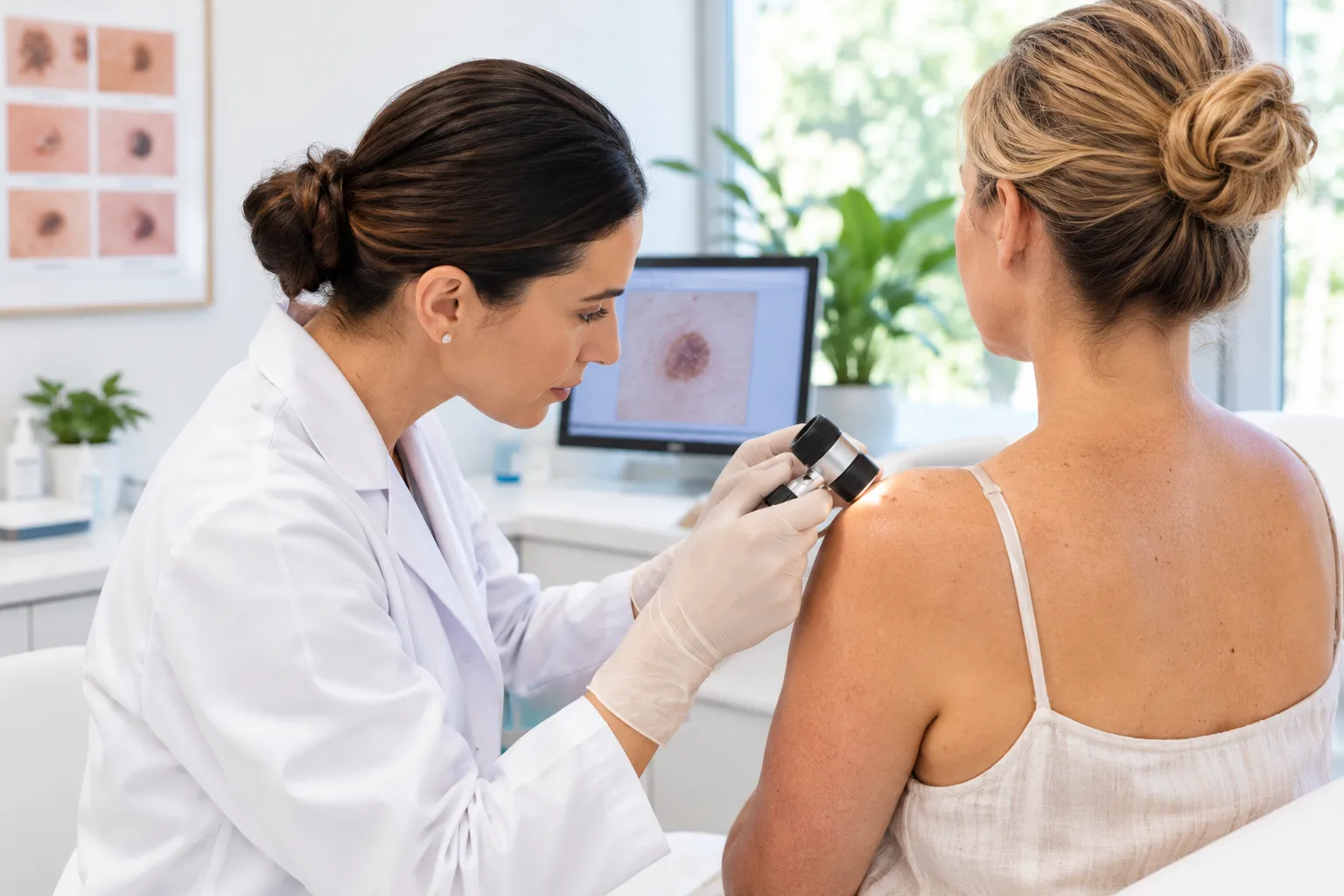
A dermatoscope is the tool most skin cancer doctors rely on. This handheld magnifier has a built-in light that lets the doctor see patterns under the surface of your skin, which makes it easier to work out which spots are harmless and which need a closer look.
Mole mapping or total body photography may also be available at some clinics. Both capture detailed images of your skin, so any changes between visits can be compared. If you have lots of moles or melanoma runs in your family, this can be especially useful.
4. What Happens If the Doctor Finds Something Suspicious?
Clinics handle a suspicious finding in different ways. Some can do a biopsy or remove the spot at the same appointment or at a follow-up visit, while others will send you to another provider for that step.
Check which procedures are done on site, for example, biopsies, excisions or freezing treatments. When diagnosis and treatment happen under one roof, the process can be quicker and less stressful.
5. How Long Until My Results Come Back?
Waiting for results can be stressful, so it helps to know what to expect before you leave the clinic. Ask how long results usually take, and whether the clinic will call you or ask you to come back in. Find out who explains your results and next steps, and whether the clinic sends reminders for your next check. A good clinic will make sure nothing falls through the cracks.
6. What Will a Skin Check Cost Me?
Fees are not the same at every clinic, so ask before you book. Check whether you will be bulk billed or pay a gap fee, and how much Medicare may give back to you. Procedures, mole mapping and pathology can carry separate costs, so ask about those as well.
Knowing the price upfront means there are no surprises later. A good clinic will be glad to explain its fees over the phone.
7. Do I Need a GP Referral to Book?
You can book straight in with most GP-led skin cancer clinics, as they do not require a referral. A dermatologist appointment works differently, because you will usually need your GP to refer you before you can claim a Medicare rebate.
8. What Should I Do Before My Visit?
After you settle on a skin cancer clinic, a few simple steps before your appointment will help you make the most of it:
- Note any spots that are new, changing, itchy or bleeding
- Bring details of any previous skin cancers or family history
- Remove nail polish and makeup so the doctor can see your skin clearly
- Wear clothes that are easy to take off
Choose the Clinic That Answers Your Questions
The right clinic will be happy to answer all of these questions. If you are due for a skin check or you have noticed a spot that has changed, book an appointment today.
Other Common Questions We Get From Patients
How often do I need a skin check?
That comes down to your level of risk. A check once a year suits many people, but you may need checks more often if you have had skin cancer before, have lots of moles or have fair skin. Your doctor can suggest a timetable that fits you.
How much time should I allow for a skin check?
Most full-body skin checks run for about 15 to 30 minutes. Your appointment may run longer if you have a large number of moles, need mole mapping or have a spot treated in the same visit.
How is a skin cancer doctor different from a dermatologist?
In most cases, a skin cancer doctor is a GP who has done additional training in skin cancer medicine. A dermatologist is a specialist who treats every type of skin condition. Either one can check your skin, but seeing a dermatologist generally requires a referral.
Is a skin check covered by Medicare?
Part of the consultation cost may be covered by Medicare, depending on how the clinic bills and which services you receive. Before you book, ask about bulk billing, gap fees and any costs charged separately.
What signs should I watch for between skin checks?
Keep an eye out for new spots and for existing spots that change in size, shape or colour. You should also look for sores that do not heal and spots that itch or bleed. If you notice anything out of the ordinary, see your doctor without delay.
