
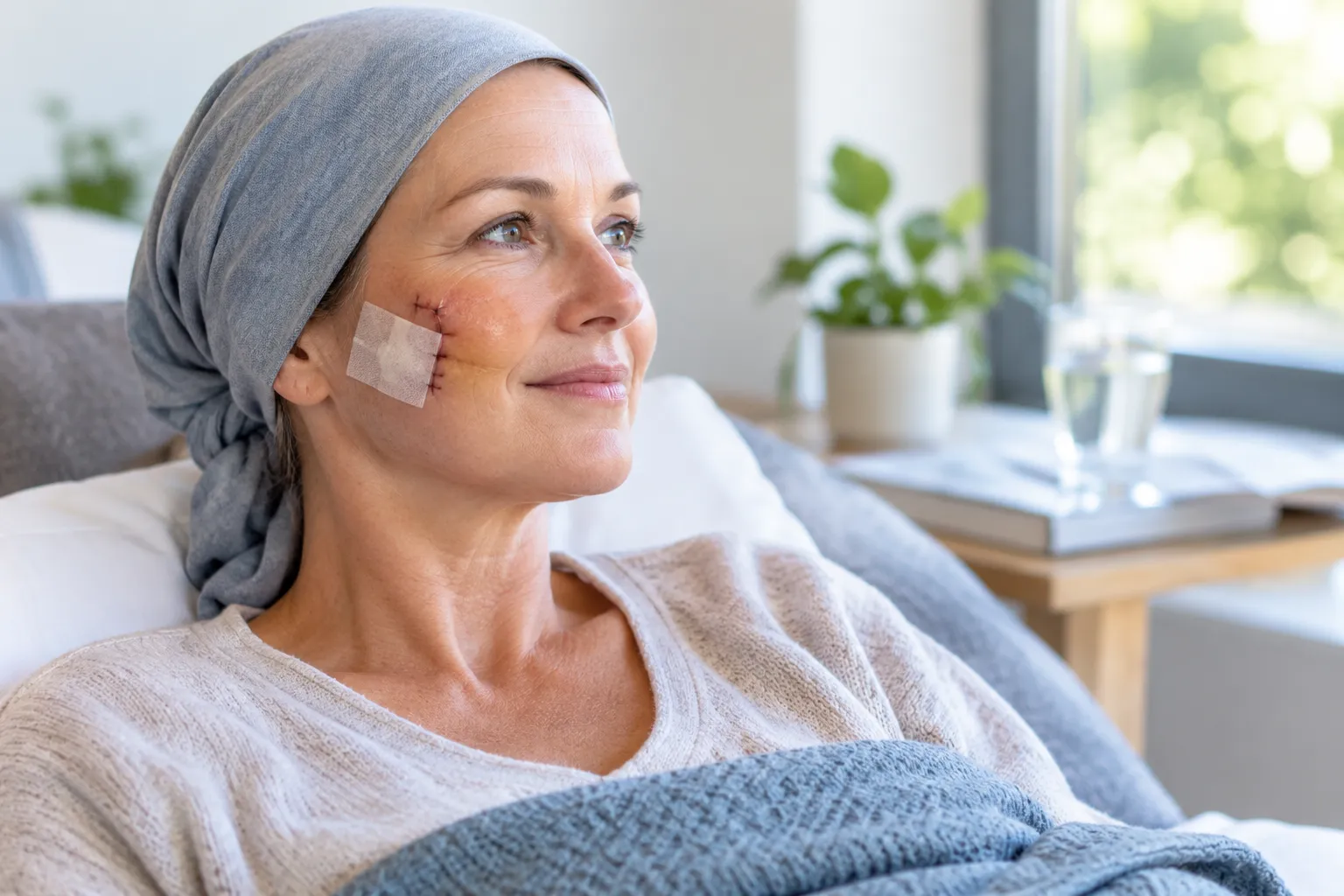
Skin cancer removal is generally a fast and simple procedure. In most cases, the excision takes place at a clinic under local anaesthetic, and you can head home on the same day, but the weeks that follow have a big influence on how your wound heals and how your scar ends up looking over the long term.
When you know what lies ahead, the whole process feels far less stressful. Below, we cover skin cancer removal surgery recovery one week at a time, so you can prepare in advance and take proper care of yourself.
Key Takeaways
- Week 1 – Initial healing: Keep the wound clean and follow your doctor’s instructions for dressing changes and wound care.
- Week 2 – Wound progress: Monitor the surgical site for healing, redness, swelling or signs of infection.
- Weeks 3–4 – Continued recovery: Larger wounds or complex procedures may require additional time to heal fully.
- Scar management: Protect the healing area from sunlight and follow medical advice to minimise scarring.
- Ongoing monitoring: Attend follow-up appointments, review pathology results and check your skin regularly for new or changing lesions.
How Long Skin Cancer Surgery Recovery Takes
Skin cancer removal recovery time depends on how big the wound is, its location on your body and your overall health. Small facial excisions tend to heal fast, but wounds on the legs and feet often need more time because circulation in those areas is slower. Your doctor will confirm exactly when you need to return. As a general guide, stitches typically come out after:
- Face: around 5 to 7 days
- Scalp, neck and body: around 7 to 14 days
- Arms and hands: around 10 to 14 days
- Legs and feet: around 14 to 21 days
Days 1 to 3: Keeping Your Wound Safe in the First Few Days
Your wound is at its most fragile in the first few days. Once the anaesthetic wears off, you may feel some mild pain or tenderness. Swelling or bruising is also possible, particularly around the eyes after surgery on the face, and you might see a little oozing or spotting on the dressing. For discomfort, paracetamol usually helps, although you should speak with your doctor before you take any anti-inflammatory medicines.
Make sure the dressing stays clean and dry, and do what your doctor tells you about when you can shower. Steer clear of bending, heavy lifting and any exercise that could place pressure on the stitches.
For wounds on the face or head, an extra pillow at night can help bring the swelling down. Should the wound bleed, hold a clean cloth firmly against it for 20 minutes without lifting, then get in touch with your clinic if the bleeding continues.
Week 1: Caring for Your Wound and Spotting Problems Early
Swelling and tenderness generally begin to ease by the end of week one. Unless their job is physically demanding, most people are back at work and their everyday activities within a day or two.
Continue looking after the wound the way your doctor advised. Often, this involves cleaning gently around it, putting on a thin layer of ointment if it has been recommended, and replacing the dressing.
Keep a close eye out for signs of infection during this time too. In a study published in the Medical Journal of Australia, researchers tracked 857 skin excisions across Queensland general practices and recorded an infection rate of 8.6%. The rate rose to 15% for wounds on the legs and feet. People with diabetes also had a higher chance of infection.
Let your clinic know if you notice:
- Worsening redness, warmth or swelling
- Pus or an unpleasant odour from the wound
- Pain that gets stronger instead of easing
- A high temperature or a general sense of being unwell
Week 2: Stitch Removal and Your Pathology Results
Stitches are often removed in the second week. Your doctor will assess the healing progress and may add paper tape or adhesive strips to support the wound further.
Your pathology results also tend to come back around now, showing whether the cancer has been completely removed. If you need further treatment, your doctor will explain the options to you.
After the stitches have been taken out, gentle exercise is usually fine again. Continue to avoid swimming, saunas and spas until the wound has closed completely.
Weeks 3 to 4: Returning to Your Usual Routine
Most wounds will have closed at this point, so you can generally return to your everyday routine, exercise and swimming included. At this stage, a pink or red scar is likely, and it may feel a little firm or raised to the touch. Both are a normal part of skin cancer excision recovery, and the scar fades as time goes on.
Months 2 to 12: Long-Term Scar Care and Sun Protection
For up to a year, your scar will keep changing, and over that period it usually becomes flatter, softer and paler. UV exposure can darken a new scar, so sun protection matters at this stage. Whenever the area is exposed, cover it up or apply sunscreen.
After the wound has completely healed, your doctor may suggest massaging it gently. You can also ask about silicone gels or sheets, as they can help some scars flatten and fade. Stay on top of regular skin checks as well, since a history of one skin cancer raises your chance of developing another.
Keep Your Skin Protected and Your Checks Up to Date
Book in with our team if a spot on your skin has changed or you are due for one of your regular Gold Coast skin checks. We will support you at each stage, from diagnosis through to treatment and follow-up.
Your Skin Cancer Recovery Questions, Answered
How long does it take to recover from skin cancer removal?
Normal activities can usually be resumed within a day or two. Stitch removal generally happens after 5 to 21 days, based on the wound’s location, and the scar goes on improving for up to 12 months.
When can I shower after skin cancer surgery?
Follow your doctor’s advice, although it is common to be asked to avoid getting the wound wet for the first 24 to 48 hours. Brief showers are generally fine after that, and you should pat the area dry gently once you are done.
Is it normal for my wound to be sore?
In the first few days, it is normal to have mild pain, tenderness and swelling. If the pain worsens rather than improves, or you also notice redness, warmth or pus, it may point to an infection, so have it checked.
When can I exercise after skin cancer surgery?
Hold off on strenuous exercise, heavy lifting and swimming until the stitches have been removed and the wound has closed. Gentle walks are usually okay, and your doctor can let you know when you can safely go back to your normal routine.
Will I have a scar after skin cancer removal?
Yes, you can expect a scar after most excisions. At first, it is usually pink or red, and it becomes lighter over the following months. Sun protection, along with the aftercare advice from your doctor, can help the scar heal well.
