
A skin cancer check should be part of your health routine because not every warning sign is obvious. You might notice a mole that changes colour, a spot that looks new, or a mark that starts to stand out. Regular checks give your doctor a closer look at your skin from head to toe, so they can identify suspicious spots and have them observed.
Key Takeaways
- Regular skin cancer checks help detect suspicious spots early, including possible melanoma, especially for people with high-risk factors.
- A full-body skin exam involves checking the entire body, including hidden areas like the scalp, feet, nails, and back.
- During the appointment, doctors review your medical history, examine your skin, and discuss any changing moles or lesions.
- Specialists may use a dermatoscope, photographs, or measurements to monitor suspicious spots and compare changes over time.
- Between appointments, monthly self-checks are important for spotting new marks, changing moles, or sores that do not heal properly.
Why Regular Skin Cancer Checks Matter
Regular skin checks help detect early signs, including possible melanoma. Skin cancer is not always easy to spot, so you will need to seek professional help to examine your body.
Accredited skin cancer doctors have training in diagnosing and managing skin cancers, which can be especially important if you have melanoma risk factors. If you cannot see a dermatologist, choose a healthcare provider with experience in melanoma checks.
How often you need a skin check depends on your risk. If you have many moles, previous skin cancer, or other melanoma risk factors, your doctor may recommend a full skin examination once a year or more often.
What Is a Full Body Skin Exam?
A complete full-body skin exam gives your doctor an initial assessment of your skin. The specialist checks for unusual moles or spots that may require closer attention. Some clinics call this a screening rather than a check — see what happens at a screening to compare.
Your doctor will check your scalp, feet, buttocks, and genital area because melanoma may also appear in hidden parts of the body. This exam helps your doctor identify changes that may suggest skin cancer. It also allows them to compare your skin over time and notice changes at future appointments.
What Happens During the Appointment?
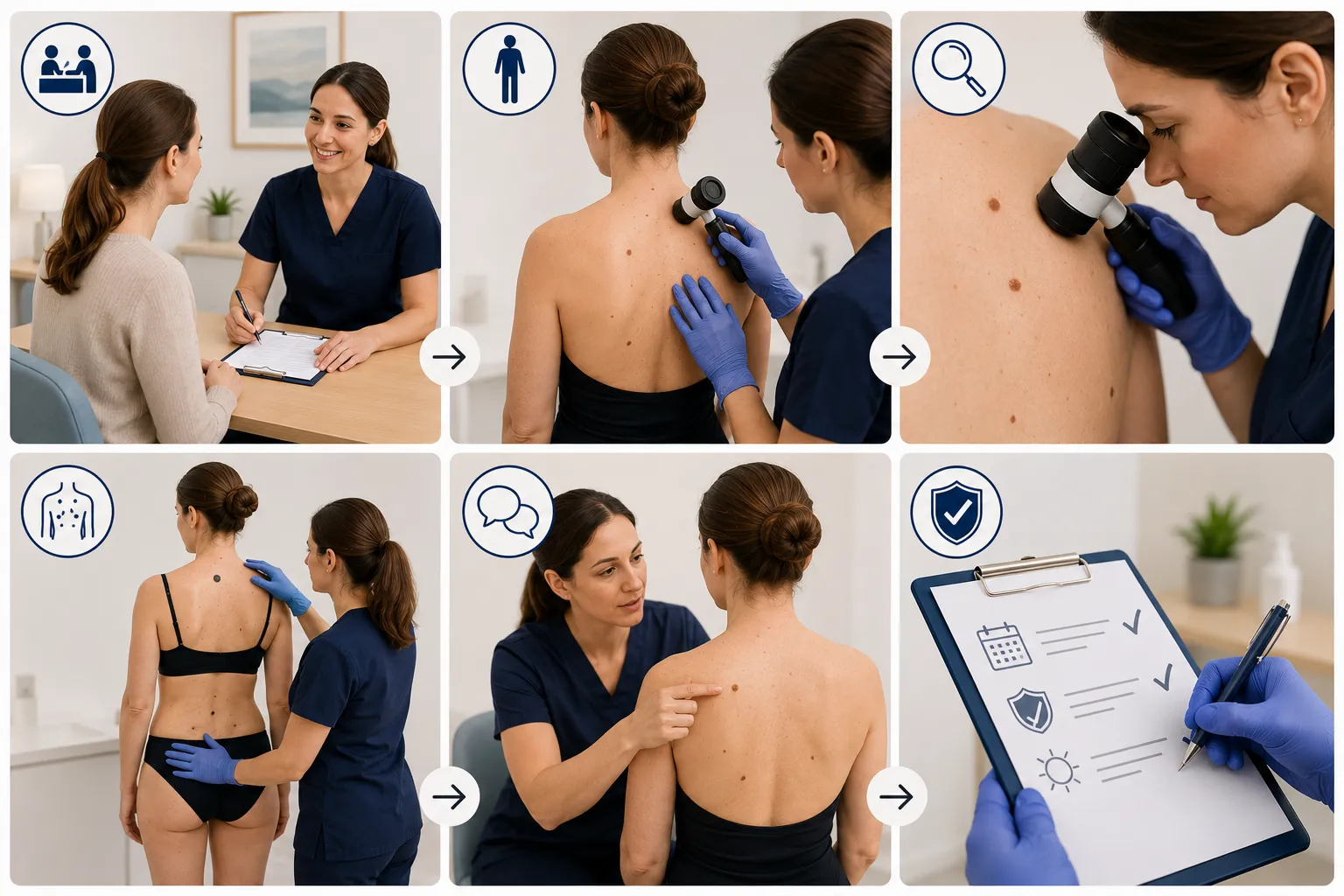
Knowing what to expect can help you feel prepared, raise concerns, and understand how your doctor checks your skin. Most appointments follow a similar flow, although each skin clinic may have its own process. Your doctor will usually ask questions, perform a skin examination, check any spots of concern, and explain what they recommend next.
1. Your Doctor Will Ask About Your Medical History
Before your doctor starts the skin check, they will ask a few questions to understand what may affect your risk. This can include your past skin concerns, family history, and the duration of your sun exposure. If your risk is higher, they may also recommend further assessment with a melanoma specialist. See who to consult for checks for guidance on choosing the right practitioner.
This part of the appointment helps guide the examination. It also gives you a chance to speak up about any mole, mark, or lesion that has changed, feels irritated, bleeds, grows, or looks different from the rest of your skin.
2. You Will Be Asked to Change Into a Medical Gown
Your doctor may ask you to wear a medical gown during a full-body skin check to ensure your skin is properly examined. This helps them check areas that clothing would normally cover and can make the appointment feel less awkward. For more ways to ease any nerves, see a skin check without stress.
You may need to remove some clothing, but you remain in control of your comfort. You can tell your doctor if you do not want them to check certain areas.
3. Your Skin Will Be Checked From Scalp to Toes
Your doctor will check your skin in an organised way. They may look at your face, ears, neck, chest, back, arms, hands, legs, and other areas where skin cancers can appear.
Skin cancer does not only develop in places that get regular sun exposure. It can also appear in areas you rarely check yourself, such as the scalp, between the toes, under the nails, behind the ears, or on the back of the body. A full skin check gives your doctor a clearer view of spots, marks, or lesions that may be easy to miss at home.
4. Your Doctor May Use a Dermatoscope
Your doctor may use a dermatoscope to check certain moles or lesions more closely. This handheld tool helps them see details that may not be clear to the naked eye.
Using a dermatoscope does not mean the spot is cancerous. It helps your doctor assess the area and decide whether it needs monitoring, testing, or no further action.
Your doctor may take notes, measurements, or photographs of moles or lesions they want to monitor. These records can help them compare your skin at future appointments and identify changes more clearly.
This can be useful if you have many pigmented moles or spots that need regular observation. In some clinics, total body photography may also be available to create a clearer reference for future skin checks.
What Happens If Your Doctor Finds Something Suspicious?
The specialist will explain and make a recommendation if they find a suspicious mole or lesion. They will monitor the spot, ask you to return, or recommend a biopsy or tissue removal to test.
Finding something suspicious does not always mean you have skin cancer. It means your doctor wants to investigate the area.
What Should You Do Between Skin Checks?
Regular appointments are important, but you should check your skin once a month. Self-check your body in good light and monitor for new spots, changes in existing moles, sores that do not heal, or marks that look different from the others. Use mirrors, or you may ask someone you trust to check areas you cannot see well.
If you notice any changes in your moles, book a skin check immediately rather than waiting until your next scheduled visit. When booking, it helps to mention that you want a full-body skin exam. This allows the skin cancer clinic to set aside enough time for a proper scalp-to-toe check.
