
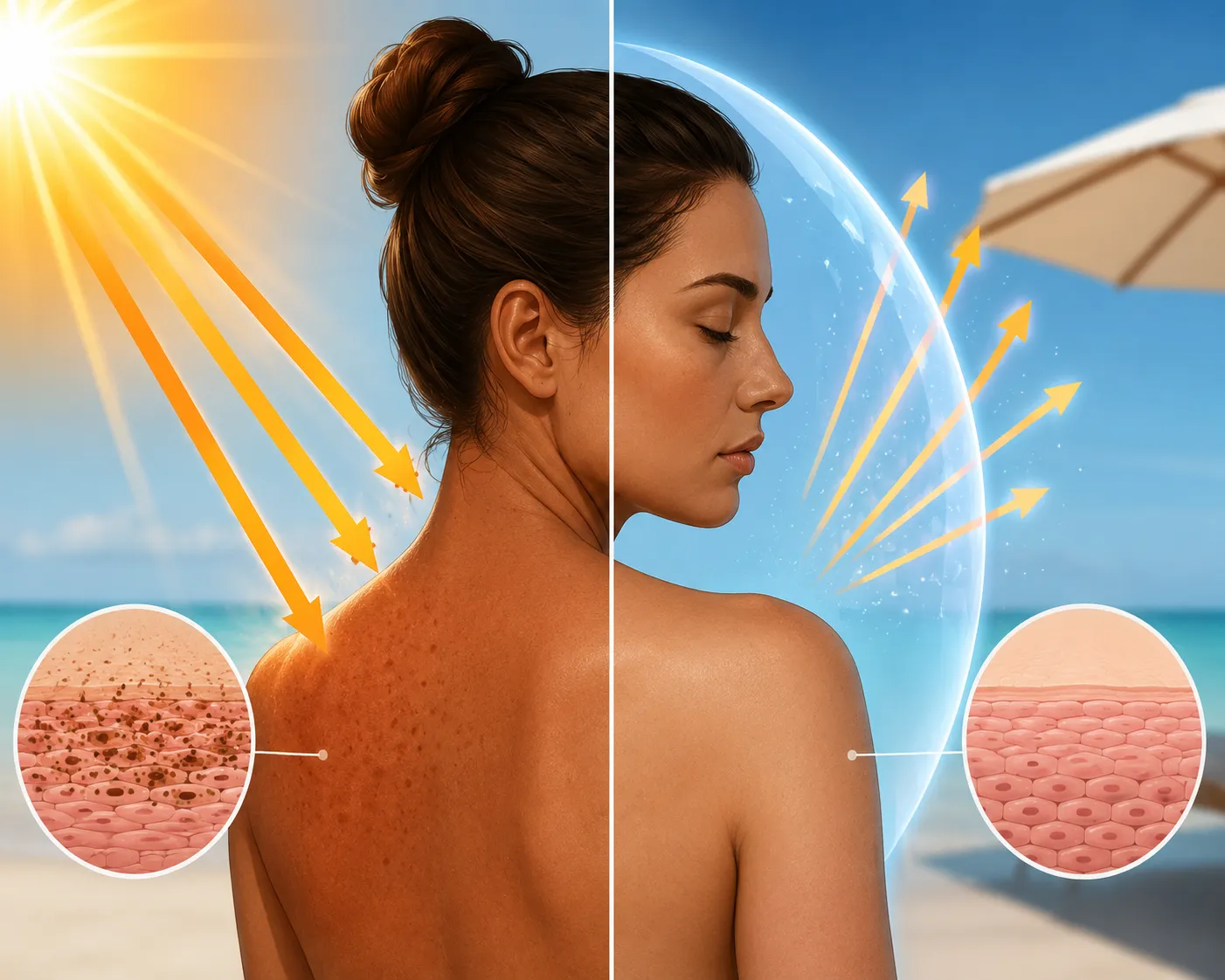
A base tan gives you a quick little colour before a summer beach holiday. The idea seems harmless, but skin does not toughen up like a muscle with repeated exposure.
When your skin darkens from UV rays, that colour does not act like armour. It shows that your skin has already reacted to UV exposure. A base tan may seem like protection, but it can still leave your skin exposed to damage. Worse, it can lead people to stay outside longer, use less sunscreen, and neglect the protection their skin needs.
Key Takeaways
- A base tan is not protective; it is a sign that UV radiation has already damaged your skin.
- UVA and UVB rays both harm the skin, contributing to ageing, pigmentation, sunburn, and skin cancer risk.
- Tanning beds are not safer than sunlight because they still expose the skin to harmful UV radiation.
- Daily sun protection, including sunscreen, hats, sunglasses, and protective clothing, helps reduce long-term skin damage.
- Regular skin checks are important, especially for people with fair skin, tanning history, moles, or past sunburns.
What Really Happens When Your Skin Tans?
A tan starts when UV radiation reaches your skin, and your body responds to that exposure. Your skin activates melanocytes, the cells that produce melanin.
Melanin gives skin its colour, and the darker shade many people call a ‘healthy glow’ is actually your skin trying to reduce further harm. That response does not mean your skin has handled the sun well. It means the exposure has already triggered a defence mechanism.
On the surface, your skin may look smooth or bronzed. Beneath that colour, UV exposure can contribute to pigmentation changes, premature ageing, and a higher risk of skin cancer. For people with a history of tanning, a melanoma specialist can assess risk factors and check for suspicious changes.
Two Main Types of UV Rays: UVA and UVB
Both UVA and UVB rays can harm your skin. A burn may make the damage more obvious, but skin can still be affected even when it does not turn red or feel sore.
UVA rays travel deeper into the skin, causing tanning, premature ageing, pigmentation, and collagen damage. They can also pass through windows while you drive, sit near a window, or work indoors in strong natural light.
UVB rays mainly affect the skin’s outer layers. They are closely linked with sunburn and play a major role in skin cancer risk.
Why a Base Tan Does Not Protect Your Skin
A base tan can feel like a bit of preparation before stronger sun, but it does not protect your skin in any real way. That darker colour means UV radiation has already affected your skin. Extra pigment cannot block enough UV to keep you safe, so UVA rays can still reach deeper layers and UVB rays can still burn the skin and increase the risk of skin cancer.
Are Tanning Beds Safer Than Sunlight?
Tanning beds may feel more controlled than sun exposure, but the amount of harmful UV radiation is the same. When UVA rays reach deep into the skin, they may cause ageing, pigmentation, and long-term damage. The colour from a tanning bed is still a damage response, not a safe glow.
If you want a bronzed look, self-tanning products or a professional spray tan are safer options than UV tanning. They can give your skin colour without deliberately exposing it to the radiation that contributes to premature ageing and skin cancer risk.
What Should You Do If You Have Tanned Before?
If you have tanned before, focus on protecting your skin from here. Reduce UV exposure, seek shade, cover up where you can, and apply sunscreen before going outside.
Avoid tanning beds, as they increase UV exposure. Book a consultation at a trusted skin clinic to check areas you may miss and flag any spots that need closer attention.
How Can You Enjoy the Sun More Safely?
You can still enjoy the sun without chasing a tan. You can have your short walks in the early morning. Move into the shade and wear clothing that will protect your skin during the afternoon.
Wear sunscreen year-round on exposed skin, check that it has not expired, and use enough for proper coverage. Reapply sunscreen every two hours, especially if you are outdoors for longer periods.
Sunscreen helps, but it should not be the only thing standing between your skin and UV damage. A wide-brimmed hat, sunglasses, and sun-protective clothing can also help reduce how much UV reaches your skin.
Why Should You Wear Sunscreen Even Indoors?
Being indoors does not always mean your skin is out of reach. Sunlight can still come through windows at home, in the office, or while you are driving. If your face, neck, arms, or hands often catch the light, your skin can still absorb UV radiation throughout the day. Wearing sunscreen daily, even indoors, gives those areas a bit more protection and helps reduce the damage that can build up quietly over time.
How Can You Lower Your Skin Cancer Risk?
Lower your skin cancer risk by limiting strong UV exposure in your daily routine, not just at the beach. Keep sunscreen, sunglasses, a hat, an umbrella, and covered clothing handy so sun protection becomes a normal part of going outside.
What Skin Changes Should You Watch For?
Watch for changes that do not fit your usual skin pattern. This may include a new spot, a mark with uneven edges, a scaly or scab-like patch, a mole that changes in colour or size, a sore that bleeds when bumped, or an open wound that does not heal.
Check Your Skin Before Damage Becomes Harder to Treat
Some skin cancers can start with no pain, itching, or bleeding. A spot does not need to hurt, bleed, or change dramatically before it deserves attention. Sometimes, the first warning sign is simply a mark that looks different from the rest of your skin, changes slowly over time, or does not heal as expected.
If you have a history of tanning, fair skin, many moles, or past sunburns, book a consultation at a trusted skin cancer clinic. A skin check gives you the chance to find changes before they become more serious.
