
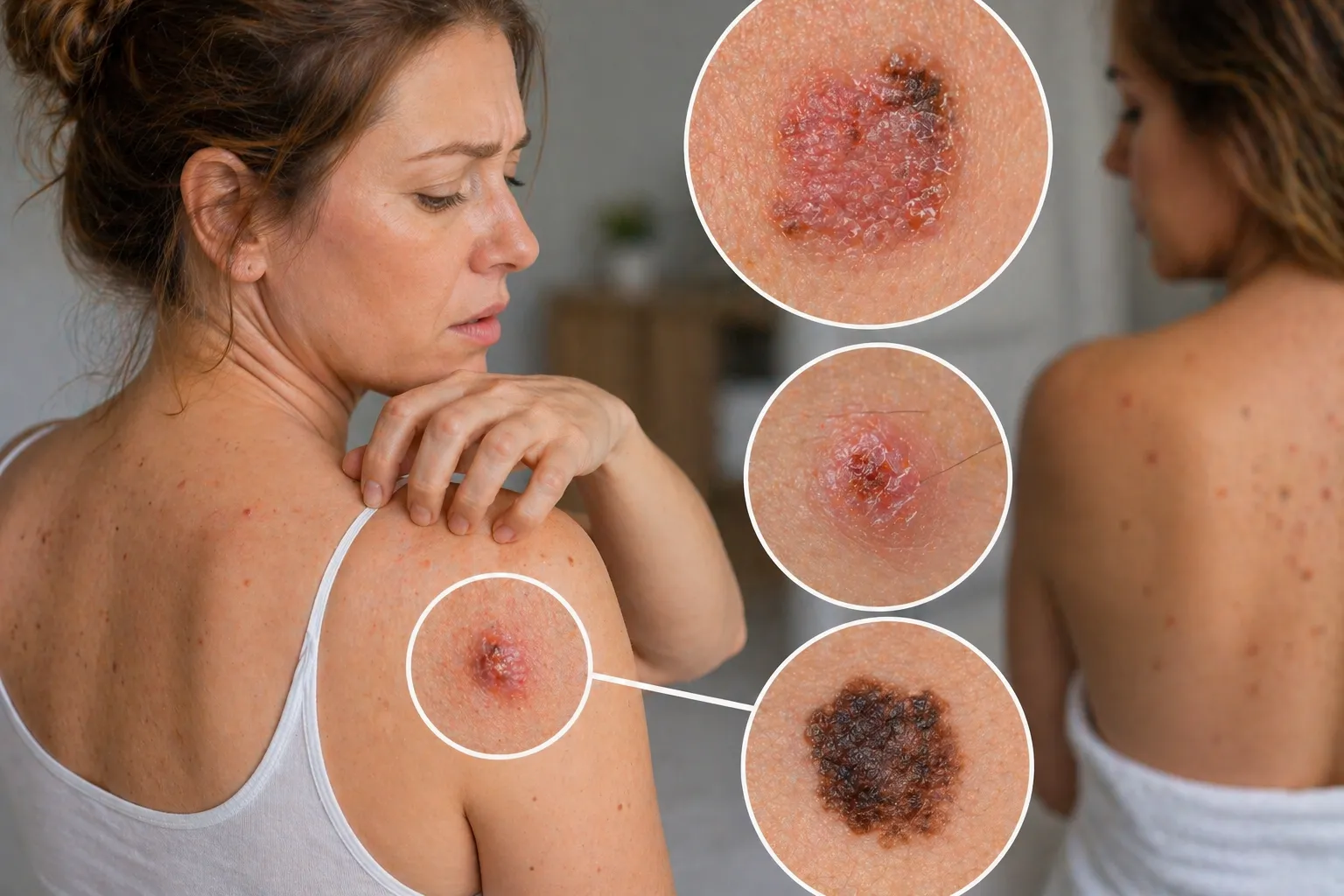
Itching is one of the most common reasons people notice changes in their skin. When a spot feels persistently irritated or uncomfortable, it can naturally cause concern, especially if it lingers. Many people question whether an itchy area is simply dryness or minor irritation or could indicate something more serious.
Key Takeaways
- Itching is usually caused by common issues like dry skin, eczema, allergies, or insect bites rather than skin cancer.
- Some skin cancers, including basal cell carcinoma, squamous cell carcinoma, and occasionally melanoma, can cause persistent localised itching.
- Concerning signs include an itchy spot that grows, bleeds, crusts, changes colour, or does not heal.
- Melanoma is more often recognised by changes in size, shape, border, or colour, but itching can sometimes occur as it evolves.
- If an itchy area lasts for weeks or shows visible changes, a professional skin check is recommended for early assessment.
Why Itchy Skin Can Be Easy to Misread
Because itching can come from many different causes, it is not always easy to tell when it is harmless and when it should be checked. Many everyday skin concerns present in similar ways, which can make a potentially concerning spot seem minor at first.
Having a clearer understanding of how suspicious skin changes typically appear, along with the patterns to watch for, can help you decide when an itchy spot warrants closer attention.
When Itching Could Be Linked to Skin Cancer
In some cases, itching may be linked to skin cancer, but on its own, it is not a clear sign. Common conditions such as eczema, dry skin, allergies, and insect bites are far more frequent causes of itchiness.
However, dermatologists do see cases where skin cancer presents with itching. Basal cell carcinoma and squamous cell carcinoma can cause ongoing irritation, tenderness, or a localised itchy feeling. These may appear as:
- A pink or pearly bump
- A scaly or crusted patch
- A sore that does not heal
- A thickened or rough area
If the itch continues without improvement, it is worth having the area assessed at a skin cancer clinic.
Can Melanoma Cause Itching?
Yes, melanoma can sometimes cause itching, along with tenderness or irritation. While itch is not the most typical symptom, it may develop as the lesion changes over time.
Melanoma is more often identified by shifts in size, shape, colour, or border. If a mole begins to itch and also shows visible changes, that combination should be checked by a melanoma specialist as soon as possible.
What Skin Cancer-Related Itching Feels Like
When itching is associated with skin cancer, it is usually persistent and localised. People often describe it as:
- Persistent or difficult to explain
- Not improving with moisturisers or over-the-counter treatments
- Accompanied by visible skin changes
- Strong enough to lead to repeated scratching without relief
In most cases, the itch is linked to something you can see, such as a spot that grows, bleeds, looks unusual, or fails to heal.
This differs from generalised itching without a visible rash, which can sometimes be linked to internal health conditions. Some systemic cancers, such as lymphoma, may cause widespread itching, but with skin cancer, the sensation is typically limited to a specific lesion.
When Itchy Skin Might Signal Something More Serious
Most itchy spots are not cancerous. In everyday dermatology practice, the majority turn out to be harmless conditions.
Still, an itch should not be ignored when it appears alongside:
- A new or changing mole
- A sore that does not heal
- Bleeding or crusting
- Rapid growth
- Uneven or changing colour
The overall pattern and how long the symptoms last are what matter most. A mosquito bite that settles within a few days is very different from a spot that continues to itch for weeks while also changing.
When to Have an Itchy Spot Examined
If a particular area has been itchy for several weeks and shows visible change, or if it bleeds after scratching and does not heal, it is a good idea to have it checked.
A professional skin assessment can help determine whether the issue is a simple irritation or requires further testing or treatment.
At our skin clinic, full-body skin checks are designed to pick up early signs of skin cancer, including subtle lesions that may present with itching. Early detection allows for more straightforward and effective treatment.
Seek Medical Advice for Persistent Itchy Spots
An itchy spot is usually harmless, but it should not be dismissed when it lingers, stays in one place, or begins to change in appearance. Paying attention to these patterns can help you recognise when something may need closer attention.
A spot that continues to itch, remains localised, or develops visible changes should be assessed rather than ignored. Acting early allows potential concerns to be identified and managed before they progress.
If you are unsure about an itchy area, a professional skin check can provide clarity and reassurance. At our skin clinic, we focus on early detection and thorough assessment to help you stay on top of your skin health.
