Being told you need skin cancer treatment can be unsettling, particularly when surgery is not the first treatment on offer. Radiotherapy suits some patients better than surgery. Because it is non-invasive and involves no cutting, it can be a good option for cancers on delicate or highly visible parts of the body.
Perhaps your doctor has brought up radiotherapy for skin cancer or you are still comparing treatments. Either way, this guide covers how the treatment works, what happens at each session and how to care for your skin as treatment goes on.
Key Takeaways
- How it works: Radiotherapy uses targeted radiation to damage cancer cells and prevent them from growing or multiplying.
- When it is used: It may treat certain skin cancers when surgery is unsuitable or help reduce recurrence after surgery.
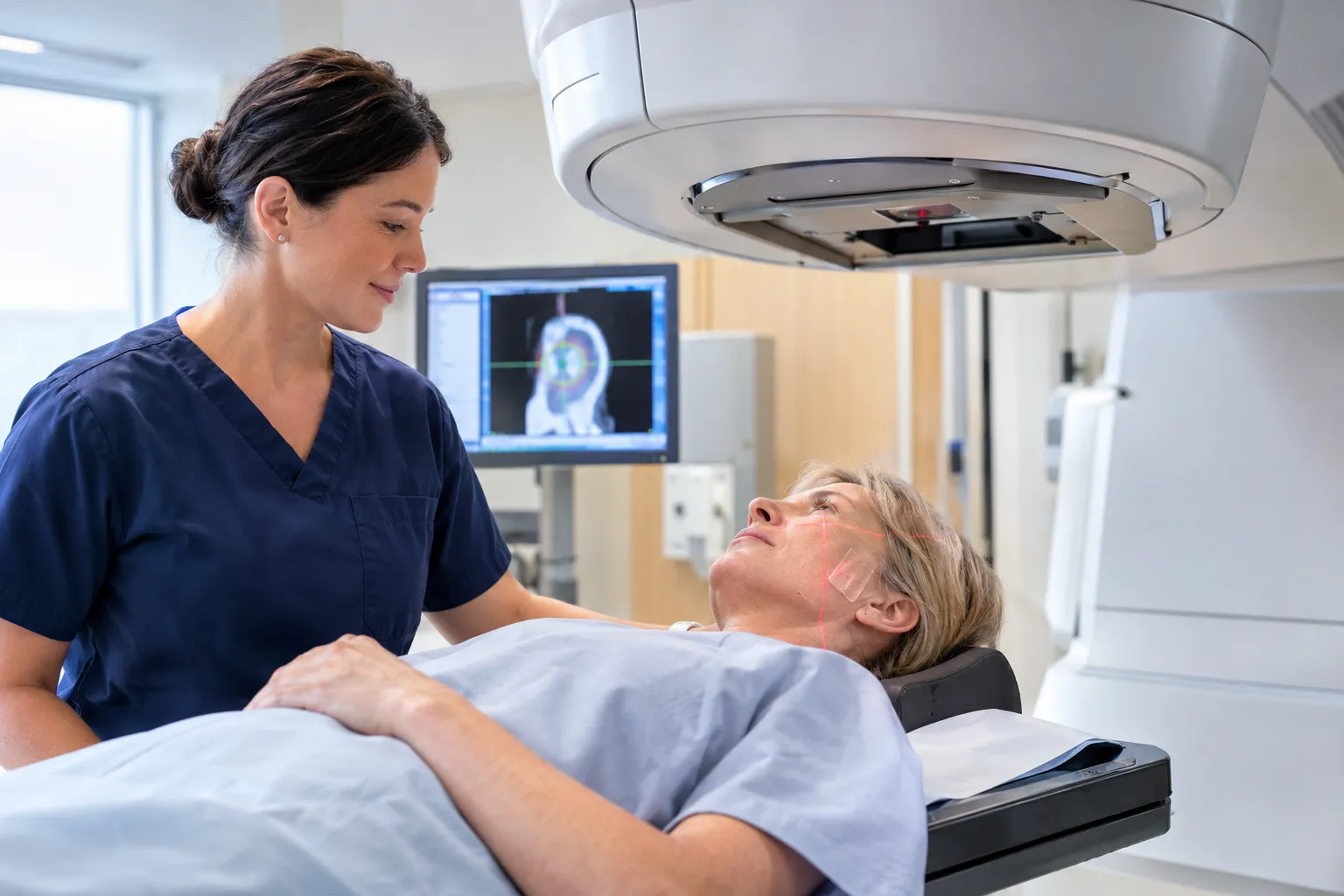
- Treatment process: Radiation is delivered externally using specialised machines, following an individual treatment planning session.
- Treatment duration: The number of sessions varies depending on the cancer type, location, patient needs and recommended treatment plan.
- Possible side effects: Treated skin may become red, dry, moist or sore. Symptoms generally improve within several weeks, with appropriate care.
Australia’s Skin Cancer Rate
Few countries have skin cancer rates as high as Australia’s. Estimates from the Australian Institute of Health and Welfare show that basal cell and squamous cell carcinomas are diagnosed more often than any other cancer here. Non-melanoma skin cancer also topped the list of cancer-related hospital admissions in 2021 to 2022, at 24% of the total.
How Radiotherapy Works
Radiotherapy destroys cancer cells with precisely directed radiation, which impairs the cells’ capacity to grow and divide. Treatment is spread across a number of sessions, giving the healthy tissue around the cancer time to recover in between.
When the target is a skin cancer, the radiation is usually aimed at the skin’s surface, so it does not reach deep inside the body. Basal cell carcinoma and squamous cell carcinoma are the skin cancers it treats most often, and they are also the two most common types.
Who Makes a Good Candidate for Radiotherapy
An article in the Australian Journal of General Practice puts its usual control rate for non-melanoma skin cancers at 90% to 95%, with the cosmetic outcome rated good or excellent in more than 90% of cases. Your doctor might recommend radiotherapy when:
- Your age or general health would make an operation more risky
- The cancer sits somewhere an operation could change your appearance or interfere with what that part of the body does
- Surgery has already been done, but some cancer cells may have been left behind or the cancer is more likely to recur
- Avoiding surgery is your preference
Radiotherapy for Facial Skin Cancer
Because the face catches more sun than any other part of the body, it is one of the places skin cancer turns up most often. Scarring is also a bigger worry on the face than anywhere else.
Choosing radiotherapy for skin cancer on face areas means a cancer on the forehead, cheek, lip, ear or eyelid can be treated without any tissue being removed. Cancers close to the eye can be treated this way too, and your treatment team may use small shields to cover the eye during each session. Keeping the tissue intact can help protect how the area looks and functions once the skin has healed.
Radiotherapy for Nose Skin Cancer
Surgery on the nose can be tricky. Because there is so little spare skin there, taking out even a small cancer can sometimes call for reconstruction or a skin graft.
Radiotherapy for skin cancer on nose areas helps keep the nose’s natural shape, as it does not cut into the skin or cartilage. Whether it suits your cancer depends on its size, type and depth, and your doctor will talk you through this.
Your Radiotherapy Journey, Step by Step
You will see a radiation oncologist, a doctor specialising in radiotherapy, before your treatment begins. They will check the area, go over your history and map out your treatment. For some people, a custom-made shield or mould is needed so the radiation stays focused on the right spot.
Most sessions take just a few minutes, and the radiation itself cannot be felt. Treatment for most people runs over several days or weeks, with the timeframe depending on the cancer’s size and type. In between sessions, you can drive yourself and keep up most of your usual activities.
What Side Effects to Expect and How to Manage Them
Side effects of radiotherapy for skin cancer are usually limited to the area being treated. They generally increase as treatment goes on and are at their strongest one to two weeks after it ends. In the short term, you may notice:
- Redness that looks like sunburn
- Dry, itchy or peeling skin
- Skin that feels sore or tender
- Skin that crusts or weeps
- Loss of hair where the skin was treated
These effects mostly clear up within a few weeks. In the longer term, treated skin may look a little lighter, thinner or smoother, and small blood vessels sometimes become visible.
While you are having treatment, clean the skin gently with lukewarm water, pat it dry and do not scratch it. Protect the area from the sun, and ask your treatment team first before putting any creams, makeup or other products on it.
Ask Your Doctor Whether Radiotherapy Suits You
Every skin cancer is different, and the best treatment depends on its type, size, location and your overall health. That is why early detection matters so much. Regular Gold Coast skin cancer checks help find problems while they are small and easier to treat. If you have noticed a new or changing spot or you would like to talk about your treatment options, book an appointment with our team today.
Common Questions About Radiotherapy for Skin Cancer
Does radiotherapy for skin cancer hurt?
No. You will not feel the radiation during treatment, and each session only takes a few minutes. Some people develop soreness or tenderness in the treated skin as treatment goes on, but this usually settles within a few weeks of finishing.
How many radiotherapy sessions will I need?
It depends on the size, type and location of your cancer. Some people need only a few sessions, while others have treatment over several weeks. Your radiation oncologist will explain your treatment plan before you start.
Will radiotherapy leave a scar?
Radiotherapy does not involve cutting, so there is no surgical scar. The treated skin may look slightly lighter, thinner or smoother over time, and small visible blood vessels can sometimes appear.
Is radiotherapy as effective as surgery for skin cancer?
For many basal and squamous cell carcinomas, radiotherapy and surgery have similar success rates. The best choice depends on the cancer’s type, size and location, as well as your age, health and preferences.
Will I be radioactive after treatment?
No. External radiotherapy for skin cancer does not make you radioactive. It is safe to be around family, children and pets straight after each session.
