
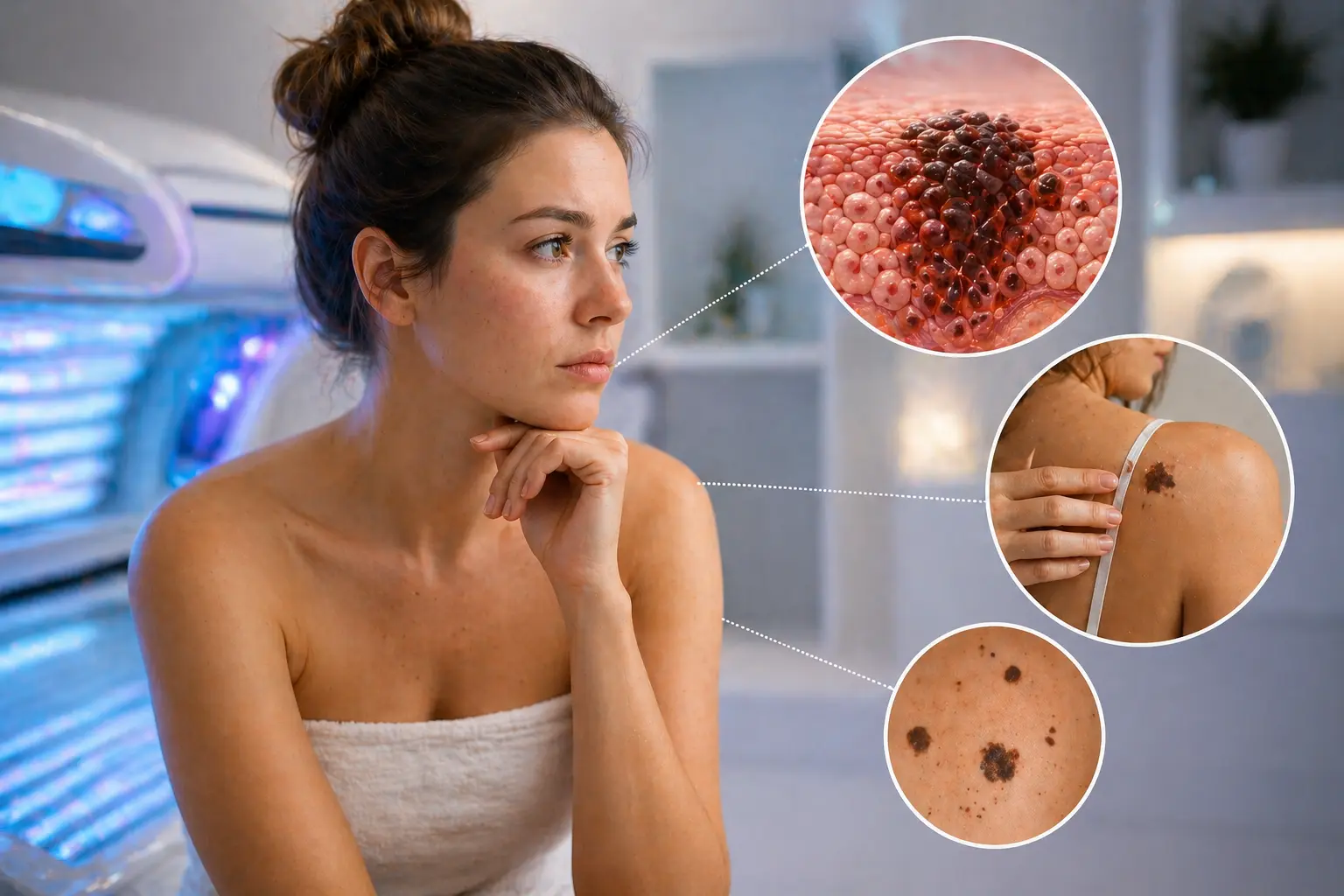
If you have ever wondered whether a quick session in a tanning bed is really as harmless as it seems, you are not alone. Many people still view indoor tanning as a controlled or safer way to achieve a tan, especially when compared to time spent in the sun. But what actually happens to your skin during these sessions is often misunderstood.
The risks linked to indoor tanning are well established and consistently recognised across the medical field. Each session contributes to cellular changes beneath the surface, gradually building up damage that may not be immediately visible but can lead to serious health issues later on.
Key Takeaways
- Tanning beds are not safe, as they emit concentrated UVA and UVB radiation that damages skin cells and increases cancer risk.
- Regular indoor tanning is strongly linked to melanoma, basal cell carcinoma, and squamous cell carcinoma.
- Starting tanning bed use before age 35 significantly raises the likelihood of developing melanoma later in life.
- Skin damage can occur even without sunburn, as tanning itself is a sign of DNA injury beneath the skin’s surface.
- Avoiding UV exposure and getting regular skin checks are the best ways to reduce long-term skin damage and detect problems early.
Is There a Safe Way to Use a Tanning Bed?
Using a tanning bed is not safe, even when it is done occasionally or with precautions in place. From a medical perspective, there is no level of use that avoids harm.
Tanning beds emit concentrated UVA and UVB radiation that penetrates deep into the skin. This exposure damages DNA within skin cells, often at levels higher than what you would experience in direct midday sun.
With repeated use, this accelerates visible ageing while also increasing the risk of developing skin cancer. The effects are cumulative, and over time, the skin becomes less able to repair the damage effectively.
There is no safe way to use a tanning bed. Any change in skin colour from UV exposure reflects injury to the skin, not protection.
What Happens to Your Skin When You Use Tanning Beds
Indoor tanning has a well-established link to skin cancer. Regular use of tanning beds increases your risk of developing melanoma, as well as other forms such as basal cell carcinoma and squamous cell carcinoma.
This risk becomes even more concerning when exposure starts at a younger age. Research shows that people who begin using tanning beds before the age of 35 face a significantly higher likelihood of developing melanoma. Each additional session adds to the overall damage, which means the effects build over time.
Because of this cumulative impact, younger individuals are particularly vulnerable. The earlier the exposure begins, the longer the skin is subjected to repeated UV damage. For these reasons, dermatologists consistently advise against indoor tanning at any age.
How Tanning Beds Affect Your Skin Over Time
When discussing the risks linked to tanning beds, melanoma deserves particular attention. Although it is less common than other forms of skin cancer, it is far more aggressive. See how rapidly melanoma progresses for more detail.
The likelihood of developing melanoma increases with repeated exposure, meaning the more often tanning beds are used, the higher the risk becomes. If you have noticed changes in your skin, consider a consultation with a melanoma specialist.
Beyond cancer risk, long-term use of tanning beds leads to lasting damage that affects both the appearance and function of the skin. Common changes include fine lines, uneven pigmentation, loss of elasticity, and ongoing irritation. Many people are surprised to learn that ultraviolet exposure can also contribute to dryness and flaking, weakening the skin barrier over time.
These effects do not happen all at once. Instead, they build gradually, with repeated exposure accelerating visible ageing and underlying damage. In some cases, the skin can begin to look older than it should for a person’s age.
Early professional care and regular assessments at a reputable skin cancer clinic are important for anyone with a history of tanning bed use. Alongside medical advice, paying attention to changes in your skin can help you catch signs of trouble early, such as unusual moles or persistent rough patches.
Is Indoor Tanning Really Safer Than Sun Tanning?
Some people assume indoor tanning is a safer option than spending time in the sun. In reality, both expose your skin to ultraviolet radiation, and both increase the risk of skin cancer.
Tanning beds deliver a concentrated dose of UV radiation in short, repeated sessions. While this exposure is controlled, it is also more intense and consistent, which allows damage to build quickly over time.
Unlike natural sunlight, which varies depending on the time of day, weather, and duration, tanning beds are designed to provide the same level of exposure each time. This makes the cumulative impact more predictable, but also more harmful.
The effects are not always visible straight away, so it is easy to underestimate the damage being done. Many people believe they are managing their exposure carefully, when in fact the risk is increasing with each session.
Whether the source is natural sunlight or a tanning device, the effect on your skin is the same. UV exposure, in any form, increases the likelihood of long-term skin damage and cancer.
How Tanning Still Damages Skin Without a Burn
Skin damage does not begin with a burn. It starts much earlier, often without any visible warning signs.
A tan is the skin’s response to DNA injury caused by ultraviolet radiation. Even without redness or discomfort, UV exposure is already altering skin cells in ways that increase cancer risk over time. This process happens beneath the surface, which is why it often goes unnoticed. It’s the same hidden process behind sun-related early skin ageing.
While the darkening of the skin may seem protective, it is actually a sign that damage has already occurred. The body is attempting to limit further harm, but it cannot reverse what has been done. Over time, repeated exposure builds up, and the skin becomes less resilient.
This type of damage is cumulative and permanent. The effects may not be immediately obvious, but they can appear years later as changes in skin texture, pigmentation, or more serious conditions. Help reduce the long-term impact by protecting your skin early—limit UV exposure and avoid tanning beds.
Why Avoiding UV Exposure Matters More Than Treatment
Avoiding ultraviolet exposure remains one of the most effective ways to reduce your risk of skin cancer. Steer clear of indoor tanning to help protect your skin before damage has the chance to develop.
For those who have used tanning beds in the past, regular checks at a trusted skin clinic are important. Early detection allows changes in the skin to be identified and addressed before they progress, and treatment outcomes are generally more favourable when issues are found early.
Ongoing UV exposure can also worsen other skin conditions. Concerns such as hyperpigmentation, melasma, and rosacea may become more difficult to manage, while autoimmune conditions like lupus can flare with continued exposure. In many cases, this leads to the need for more specialised dermatological care.
Protect Your Skin Before Damage Sets In
Indoor tanning is not a harmless cosmetic choice. Research consistently shows that tanning beds increase the likelihood of melanoma and other forms of skin cancer, while also contributing to long-term skin damage.
If you have used tanning beds in the past or have noticed changes in your skin, speak with a qualified professional at Skin Clinic Robina. Learn the early signs of skin cancer to watch for. Our focus is on prevention and helping you better understand your skin. Let us help you support healthier skin over time with regular skin checks.
