
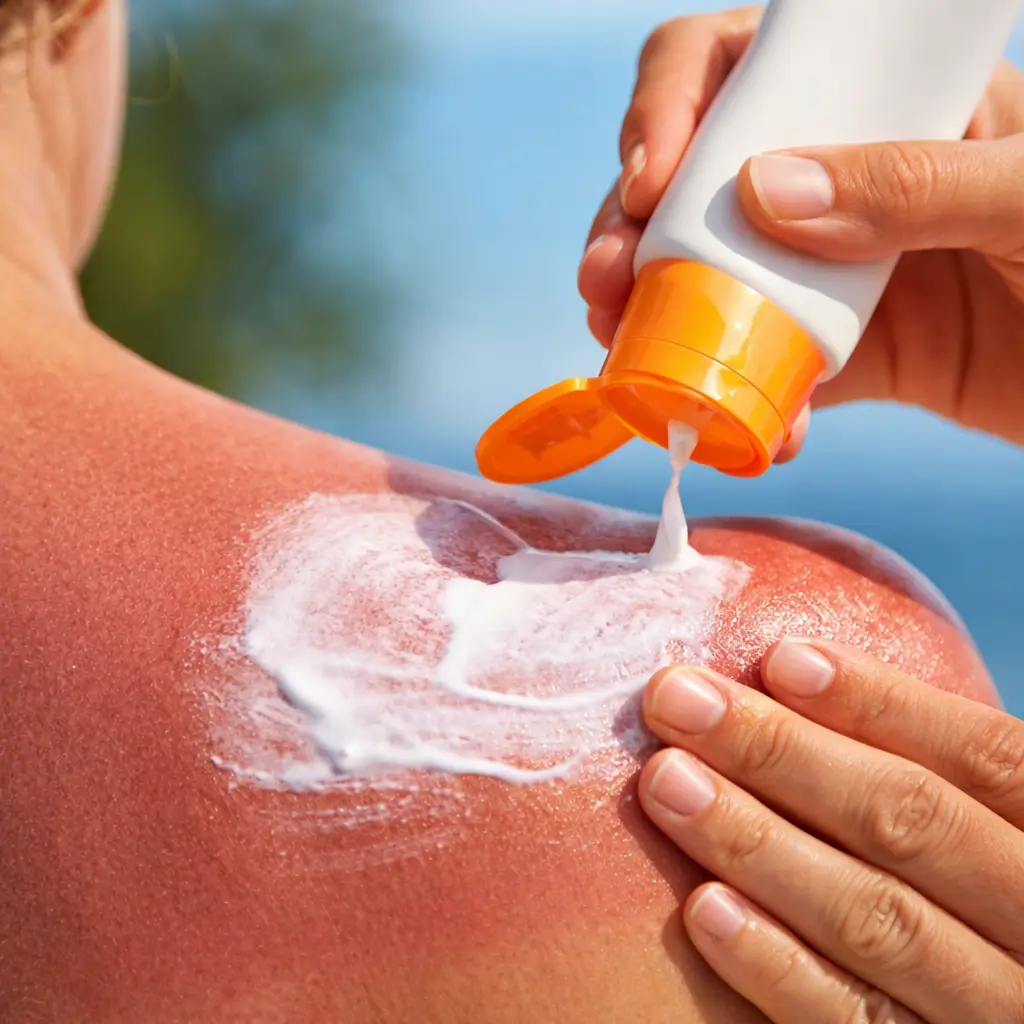
Sunburns happen even when we try to be careful. A long afternoon outside or a forgotten reapplication can leave your skin red, warm, and tender. Once the damage is already there, many people wonder whether applying sunscreen will help or just irritate the burn further.
What Happens When Skin Gets Sunburned
A sunburn is your skin’s response to too much ultraviolet exposure. When UV rays damage skin cells, the body triggers inflammation to repair the injury. That reaction causes the redness, heat, swelling, and pain people associate with sunburn.
In mild cases, only the outer layer of skin is affected. This type of burn usually causes redness and discomfort but heals within a few days. More severe burns reach deeper layers of skin and may lead to blistering, intense pain, and longer recovery time.
The discomfort from a sunburn can also occur because damaged skin may affect nerve endings near the surface. This is why even light contact with clothing or water can sometimes feel uncomfortable while the skin is healing.
Key Takeaways
- Applying sunscreen to sunburnt skin can help protect damaged skin from further UV exposure, but it should be done carefully.
- Use gentle, fragrance-free, and mineral-based sunscreens to avoid irritation on sensitive, inflamed skin.
- Avoid sunscreens containing alcohol, fragrances, or harsh chemicals that may worsen irritation.
- Physical sun protection, such as clothing, hats, and shade, is equally important during the healing process.
Should Sunscreen Be Applied to Sunburned Skin
The short answer is yes. Sunscreen can be applied to sunburned skin, especially if you need to spend time outdoors while your skin recovers. Without protection, the already damaged skin becomes even more vulnerable to further UV exposure.
In fact, once your skin is already inflamed, it becomes more sensitive to additional UV exposure. The right sunscreen, applied gently, can help prevent further damage while your skin heals.
However, not every sunscreen will feel comfortable on irritated skin. Products that contain heavy fragrances, alcohol, or strong active ingredients may cause stinging. When the skin is already inflamed, choosing a gentler product helps reduce irritation.
Applying the right sunscreen should also be done carefully. Use light pressure, avoid rubbing the skin too firmly, and follow reapplication instructions if you remain outside for extended periods.
How Sunscreen Protects Sunburned Skin
Sunscreen works by preventing ultraviolet radiation from penetrating deeper layers of the skin. Some formulas absorb UV radiation, while mineral sunscreens reflect it away from the skin’s surface.
When skin is sunburned, the natural barrier that protects it is already weakened. Applying sunscreen carefully and reapplying it as directed helps maintain that protection when spending time outdoors.
Choose Sunscreen That Is Gentle on Irritated Skin
Mineral-based formulas are often better suited for sensitive or irritated skin. Sunscreens that contain ingredients such as zinc oxide or titanium dioxide sit on the surface of the skin and reflect ultraviolet rays. Because they do not need to be absorbed into the skin to work, they are less likely to cause stinging.
Fragrance-free formulas are also a safer choice for sunburned skin. They reduce the chance of additional irritation and tend to feel more comfortable when the skin is already tender. This can also be especially helpful for children and people with sensitive skin.
Why Sun Protection Still Matters After a Sunburn
Even though the skin is already damaged, protection is still important while it heals. Continued sun exposure can worsen inflammation, slow the recovery process, and increase the risk of longer-term skin damage. Applying sunscreen during this period offers several benefits that help protect and support the healing skin.
Protect Healing Skin from Further Sun Exposure
Sunburned skin is already injured, which means it is more vulnerable to additional ultraviolet exposure. Applying sunscreen creates a protective layer that helps shield the skin while it recovers. Without that protection, even short periods in the sun can worsen redness, irritation, and sensitivity.
Reduce the Risk of Discolouration or Scarring
Repeated exposure to sunlight while the skin is healing can lead to pigmentation changes. Some people may notice darker patches or uneven skin tone after a burn if the skin continues to receive UV exposure. Protecting the area with sunscreen can help lower the chance of these longer-term marks developing.
Provide Some Relief for Inflamed Skin
Certain mineral sunscreens contain zinc oxide, which can feel calming on irritated skin. While sunscreen is not a treatment for sunburn itself, some formulations may provide mild comfort when applied gently.
Support Long-Term Skin Health
Every sunburn increases the likelihood of skin damage over time, and repeated burns are linked to a higher risk of skin cancer later in life. Consistent sun protection helps reduce further damage, even after a burn has already occurred.
If you have experienced frequent sunburns or are concerned about changes in your skin, consider booking a consultation at a skin cancer clinic. Early detection and regular monitoring help identify potential issues before they develop into more serious concerns.
Know When to Rely on Shade and Protective Clothing Instead
In some cases, a sunburn may be too painful for any product to be applied comfortably. If the skin feels extremely tender or blistered, it may be better to avoid applying sunscreen directly to the affected area for a short time.
Instead, protect the skin by staying in the shade, wearing loose and breathable clothing, and limiting direct sun exposure until the skin begins to calm down. Once the irritation decreases, sunscreen can be reintroduced to help protect the healing skin from further exposure.
Common Questions About Sunburn Care
People often have questions about what to do after a sunburn, especially when the skin feels sore or sensitive. These are some of the most common questions patients ask during appointments at a skin clinic.
How can you help a sunburn heal faster?
Get out of the sun and allow the skin to cool down. Applying a damp cloth or taking a gentle, cool shower can help reduce heat and inflammation.
Keep the skin hydrated to support the healing process. Lightweight moisturisers or aloe vera gels can help restore moisture, while drinking water helps the body recover from the inside.
Which products should you avoid on sunburned skin?
Petroleum jelly, strong exfoliants, and heavily fragranced lotions may worsen discomfort or slow the healing process because they can irritate damaged skin or trap heat. It is usually best to choose gentle, fragrance-free products while the skin is recovering.
Can you use lotion on sunburned skin?
Lotion can be helpful for restoring moisture to sunburned skin as long as it is the right type. Lightweight, fragrance-free moisturisers or aloe-based gels can calm irritation and support hydration. Heavier products that feel greasy may trap heat in the skin, which can increase discomfort during the healing process.
Protect Sunburned Skin While It Recovers
Healing from a sunburn takes time, and protecting the skin during that period can help prevent further irritation. If you do need to spend time outdoors, choose a gentle mineral sunscreen and apply it carefully to help protect your skin while it recovers from the burn.
If you notice unusual moles, persistent redness, or skin changes after repeated sun exposure, consider booking a consultation with a melanoma specialist. A professional skin assessment helps identify concerns sooner and supports long-term skin health.
FAQs
Should you apply sunscreen to sunburnt skin?
Yes, sunscreen should still be applied to sunburnt skin, but it needs to be done carefully. Sunburn indicates that the skin is already damaged and more sensitive to further UV exposure. Applying sunscreen helps protect the affected area from additional harm while it heals. However, it is best to use a gentle, broad-spectrum sunscreen that is suitable for sensitive skin. Avoid products with fragrances or harsh ingredients, as these may cause further irritation and discomfort.
Can sunscreen help sunburn heal faster?
Sunscreen does not directly speed up the healing process of sunburn, but it plays an important role in preventing further damage. When sunburnt skin is exposed to more UV radiation, it can worsen inflammation and delay recovery. By applying sunscreen, you reduce the risk of additional exposure, allowing the skin to recover more effectively. Supporting healing also involves staying hydrated, using soothing skincare products, and avoiding prolonged sun exposure while the skin repairs itself.
What type of sunscreen is best for sunburnt skin?
For sunburnt skin, a gentle sunscreen designed for sensitive or damaged skin is usually the most suitable choice. Mineral-based sunscreens containing ingredients like zinc oxide are often recommended because they sit on the surface of the skin and are less likely to cause irritation. Products free from alcohol, fragrances, and strong active ingredients are also preferable. Choosing a formulation that is soothing and non-irritating helps protect the skin without adding to the discomfort.
Should you avoid the sun completely if you have sunburn?
It is best to limit sun exposure as much as possible while your skin is healing from sunburn. The damaged skin is more vulnerable and can be easily aggravated by further UV exposure. Staying in the shade, wearing protective clothing, and using sunscreen when you need to be outdoors can help reduce additional stress on the skin. Minimising exposure allows the healing process to progress without interruption and reduces the risk of worsening the burn.
What else should you do to care for sunburnt skin?
Caring for sunburnt skin involves more than just sun protection. Keeping the skin cool and hydrated can help relieve discomfort and support recovery. Using gentle, fragrance-free moisturisers or soothing products can help restore moisture and reduce dryness. Drinking plenty of water also supports hydration from within. Avoid picking or peeling the skin, as this can increase irritation and the risk of infection. Taking a careful, supportive approach helps the skin heal more comfortably and effectively.
